Hybrid Maritime Connectivity: 5 Reasons Smart Ships Use Starlink, OneWeb & VSAT Backups

Maritime Technology,News
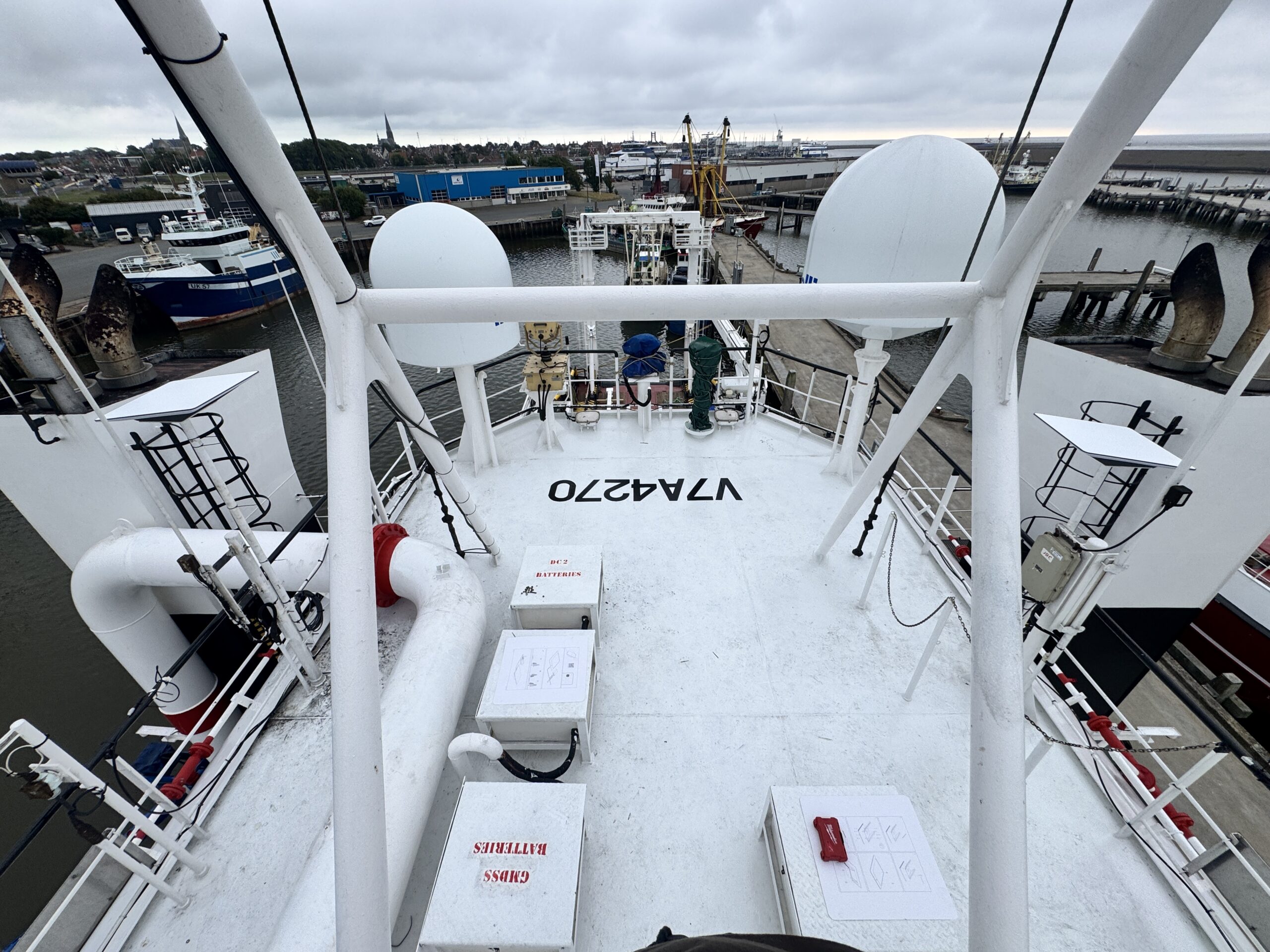
Hybrid maritime connectivity showing a smart ship using Starlink, OneWeb, and VSAT satellite systems for global redundancy

Why Smart Ships Use Starlink, OneWeb and Traditional Satellite Backups

What Is Hybrid Maritime Connectivity?

Hybrid maritime connectivity has become the new standard for smart ships operating in today’s digital maritime environment. In modern shipping, reliable global internet connectivity is no longer optional—it’s essential. From cybersecurity and vessel monitoring to crew welfare and predictive maintenance, connectivity is now the backbone of safe, efficient, and compliant operations at sea.

That’s why forward-thinking fleet operators are adopting a hybrid approach that combines multiple networks for performance and resilience:

This combination is quickly becoming the gold standard for maritime IT because it delivers both speed and redundancy—without compromising coverage or security.


Hybrid Maritime Connectivity for Global Coverage on Any Route

While Starlink and OneWeb provide broad coverage, each network can face licensing and regional limitations:

  • Starlink may be unavailable or restricted in certain territorial waters due to local regulations and licensing.

  • OneWeb continues expanding coverage and may have limitations in specific regions depending on service rollout and local availability.


Hybrid maritime connectivity showing a smart ship using Starlink, OneWeb, and VSAT satellite systems for global internet redundancy

This is where traditional satellite systems remain extremely valuable:

  • VSAT has operated globally for decades and is widely licensed across maritime zones.

  • FleetBroadband (FBB) is practical for near-shore, port, and harbor communications and can serve as a reliable emergency path.

  • Iridium Certus offers exceptional polar coverage, making it indispensable for high-latitude operations.

By combining LEO services with traditional solutions, hybrid maritime connectivity ensures vessels maintain consistent communications across ocean crossings, coastal routes, and regulated waters.

Hybrid Maritime Connectivity and Satellite Redundancy at Sea

Even the most advanced Low Earth Orbit (LEO) networks can experience:

  • Temporary outages

  • Bandwidth congestion in high-demand areas

  • Regulatory restrictions in territorial waters

  • Obstructions or installation constraints affecting antenna performance

A dedicated backup link is the difference between “internet is down” and “operations continue.” With hybrid maritime connectivity, vessels can implement a true failover strategy:

  • Primary link handles high-bandwidth traffic and low-latency operational needs.

  • Secondary link takes over automatically when the primary network degrades or becomes unavailable.

  • Critical systems remain online, and the vessel maintains a baseline communication channel for safety and compliance.

This is not just about convenience. Redundancy supports operational continuity for navigation updates, security monitoring, remote diagnostics, and business communications—especially during port operations, audits, or incident response.

Temporary outages

Bandwidth congestion

Legal restrictions in territorial waters

By maintaining a secondary satellite system—like traditional VSAT, FBB, or Iridium—you build a failover safety net that ensures your ship stays connected under all conditions.

Hybrid maritime connectivity architecture illustrating Starlink and OneWeb LEO satellites with VSAT backup for secure ship communications

How Smart Ships Segment Traffic Using Hybrid Maritime Connectivity

A practical segmentation model looks like this:

  • Use Starlink for crew internet access, welfare services, and entertainment traffic.

  • Assign OneWeb for real-time vessel data, monitoring, and IoT communications where stable performance is required.

  • Reserve VSAT or FBB for critical system updates, corporate VPN, and emergency communications.

This approach helps enforce bandwidth policies, keeps mission-critical services isolated, and supports a more robust security posture—particularly for vessels operating under strict compliance requirements.


Hybrid Maritime Connectivity for Cybersecurity and Traffic Segmentation

One of the most overlooked advantages of hybrid maritime connectivity is the ability to segment communications for stronger cybersecurity and better performance.

Instead of pushing all traffic through a single pipe, vessels can distribute usage based on risk and priority. This reduces attack surface, avoids overload, and improves compliance with IT policies.


Why Hybrid Maritime Connectivity Is the New Standard for Smart Ships

Smart shipping is increasingly data-driven. Operators expect continuous telemetry, remote monitoring, planned maintenance, and secure digital workflows—without interruption. Hybrid maritime connectivity enables fleet operators to balance performance, security, and regulatory compliance in a single architecture.

By combining LEO networks such as Starlink and OneWeb with traditional VSAT, FleetBroadband, or Iridium Certus systems, ships gain operational resilience. This layered model reduces single points of failure, improves uptime, and keeps critical communications available even when a network is congested or restricted.

LEO, GEO, and MEO Satellites in Hybrid Maritime Connectivity

A hybrid approach can also leverage different orbital strengths:

  • LEO (low latency, high speed) for day-to-day internet and cloud workflows.

  • GEO (stable wide coverage) for consistent backup and regulated zones.

  • MEO / Polar coverage options (e.g., Iridium) for high-latitude and remote routes.

If you want to explore a global coverage benchmark for polar regions and truly remote areas, you can reference Iridium’s maritime connectivity overview here:

Final Thoughts: Building a Future-Proof Maritime Connectivity Stack

Hybrid connectivity is no longer a future concept—it’s a proven operational model. As vessels become smarter and more dependent on continuous data exchange, hybrid maritime connectivity ensures resilience, safety, and performance across all maritime sectors.

If your fleet operates globally, relies on onboard IT systems, or prioritizes crew welfare and cybersecurity, the most robust design is clear: combine Starlink + OneWeb for high-speed primary connectivity and maintain VSAT / FBB / Iridium Certus as strategic, always-ready backups. This is how modern ships stay online—always operational, always compliant, and prepared for the unexpected.

 

Tag Post :
Crew Welfare Connectivity,GEO VSAT Backup,hybrid maritime connectivity,LEO Satellite Maritime,Maritime cybersecurity,Maritime IT,Maritime VSAT,OneWeb Maritime,Satellite Redundancy,Ship Internet Solutions,Smart Ship,Starlink Maritime
Share This :