
Marine TVRO · Satellite TV at sea
Marine TVRO Satellite TV without using internet data
Live news, sports and entertainment for crew cabins, mess rooms and passenger lounges. A marine TVRO antenna follows the television satellite automatically while the vessel moves, so your Starlink, OneWeb or VSAT capacity stays free for operations and crew communication.
Television Receive Only
What is a marine TVRO system?
TVRO stands for Television Receive Only. It is a satellite antenna system that receives television broadcasts directly from a TV satellite, such as Astra, Hotbird, Eutelsat or Türksat, and delivers them to the televisions on board.
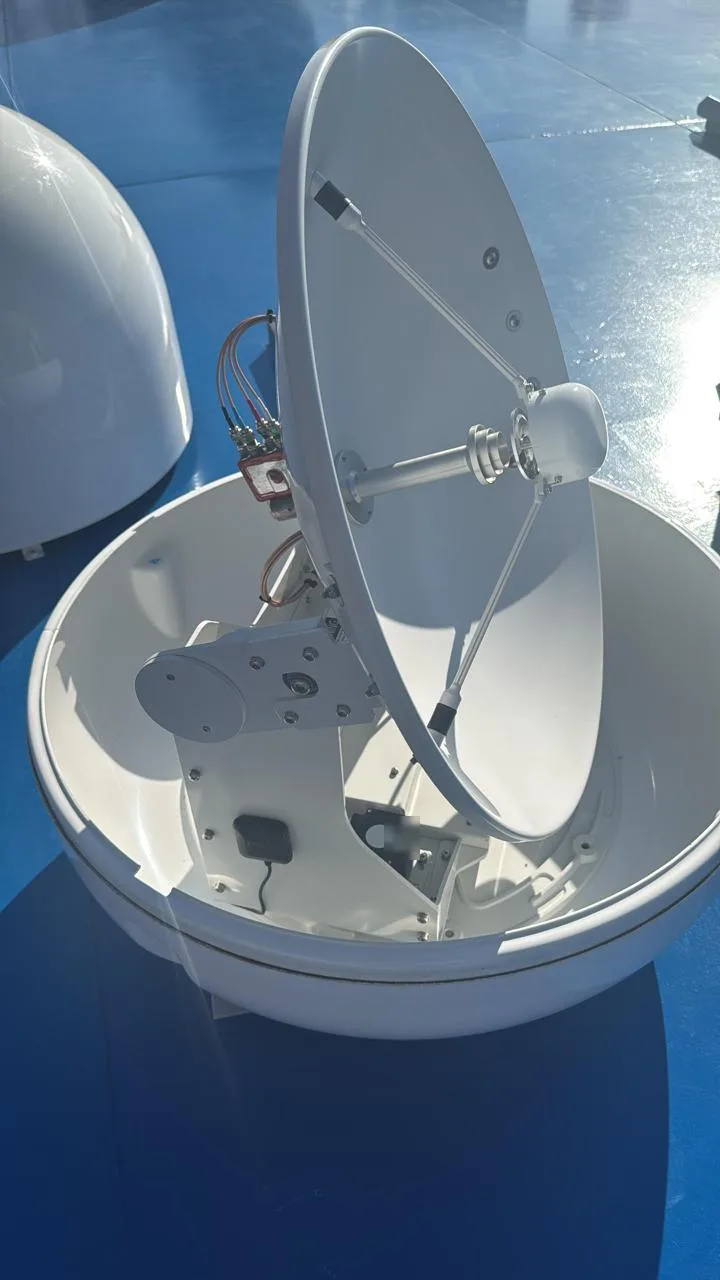
A marine TVRO antenna is built for a moving platform. Unlike a fixed satellite dish on a building, it sits on a stabilised, motorised pedestal inside a weatherproof radome and continuously corrects its position for changes in heading, roll and pitch.
TVRO only receives. It works completely separately from the vessel's Starlink, OneWeb or VSAT internet connection, which is exactly why it is such an efficient way to provide television at sea.
- Dish, LNB and tracking pedestal protected by a radome
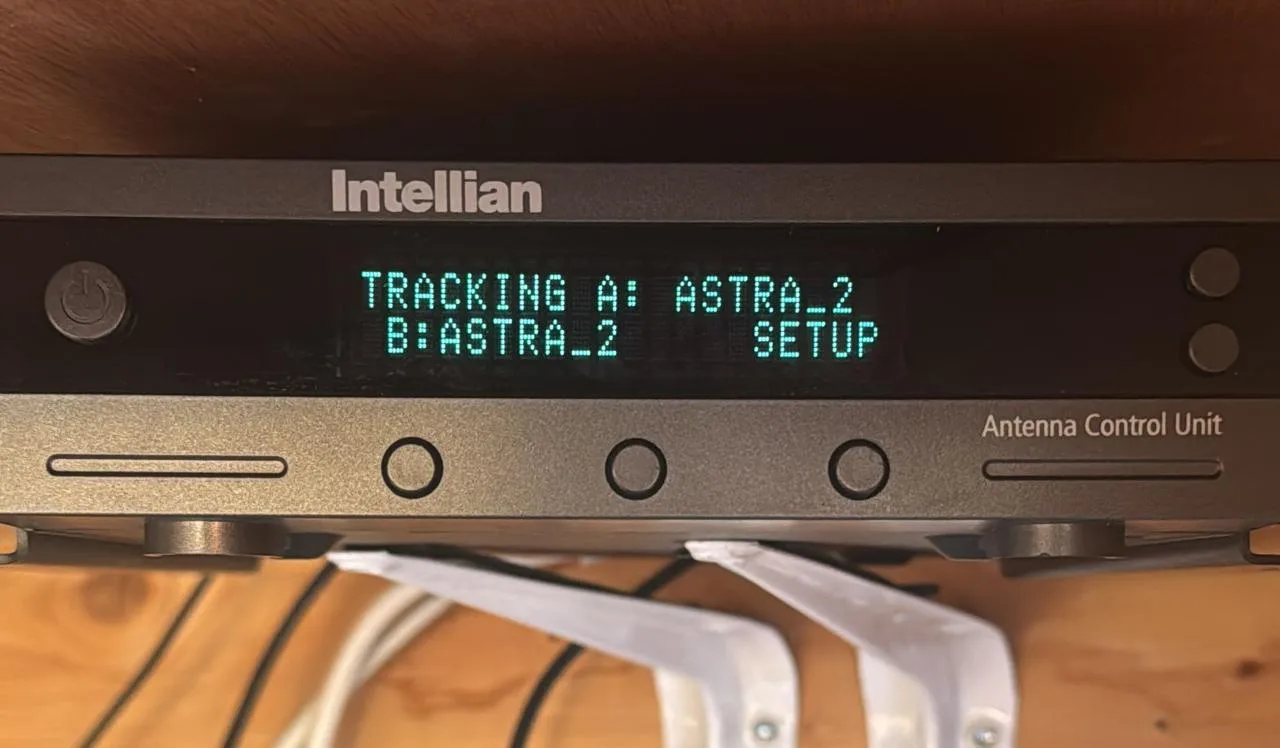
- Antenna control unit (ACU) below deck to select and monitor the satellite
- Satellite receivers, a multiswitch or an IPTV headend to feed the TVs
Stabilised satellite tracking
How does a TVRO antenna work while sailing?
Inside the protective dome, motors move the dish while gyro sensors, a GPS receiver and tracking electronics locate and follow the selected satellite. As the vessel turns, rolls or pitches, the antenna adjusts its azimuth, elevation and skew many times per second to keep signal lock.
The crew does not need to reposition the dish whenever the vessel changes course. The antenna control unit on the bridge or in the equipment room shows which satellite is being tracked, and with a dual-output antenna two receivers or a full distribution system can be fed from the same dish.
What affects reception at sea?
- Satellite footprint: each TV satellite beam covers a specific region. Outside the footprint, or at its edge, a larger dish is needed or the signal is lost.
- Antenna size: larger reflectors (for example 60, 85 or 105 cm) hold the signal further from the beam centre and in worse weather.
- Line of sight: masts, funnels, cranes and other structures can block the satellite on certain headings.
- Weather: very heavy rain can briefly weaken Ku-band reception (rain fade).
- Interference: radar beams and other RF sources close to the radome can disturb tracking.
Choosing the right antenna size and the right mounting position during the survey keeps these interruptions to a minimum. Where blockage cannot be avoided, a second antenna can be installed on the other side of the vessel with automatic switching between the two.
Save bandwidth
Watch satellite TV without consuming internet data
TVRO receives broadcast television directly from the satellite, so watching these channels does not consume any of your vessel's internet allowance. Live TV streaming is one of the biggest consumers of onboard bandwidth: when ten crew members stream the same football match separately, the vessel pays for that data ten times.
Replacing live streaming with satellite television reduces data consumption and leaves more bandwidth for business applications, video calls, email and crew welfare. Even on an unlimited plan, TVRO takes heavy streaming traffic off the link and keeps the connection responsive for everyone.
Which channels can you watch?
Available channels depend on your sailing area, the satellite you receive and the television provider. Many news, sports and entertainment channels are free-to-air. Encrypted packages, such as Sky, Canal+, Digiturk or TV Vlaanderen, require a compatible receiver or CAM module and an appropriate subscription. We advise which satellites and packages suit your routes and crew nationalities.
Multiswitch distribution
Distribute satellite TV to every cabin
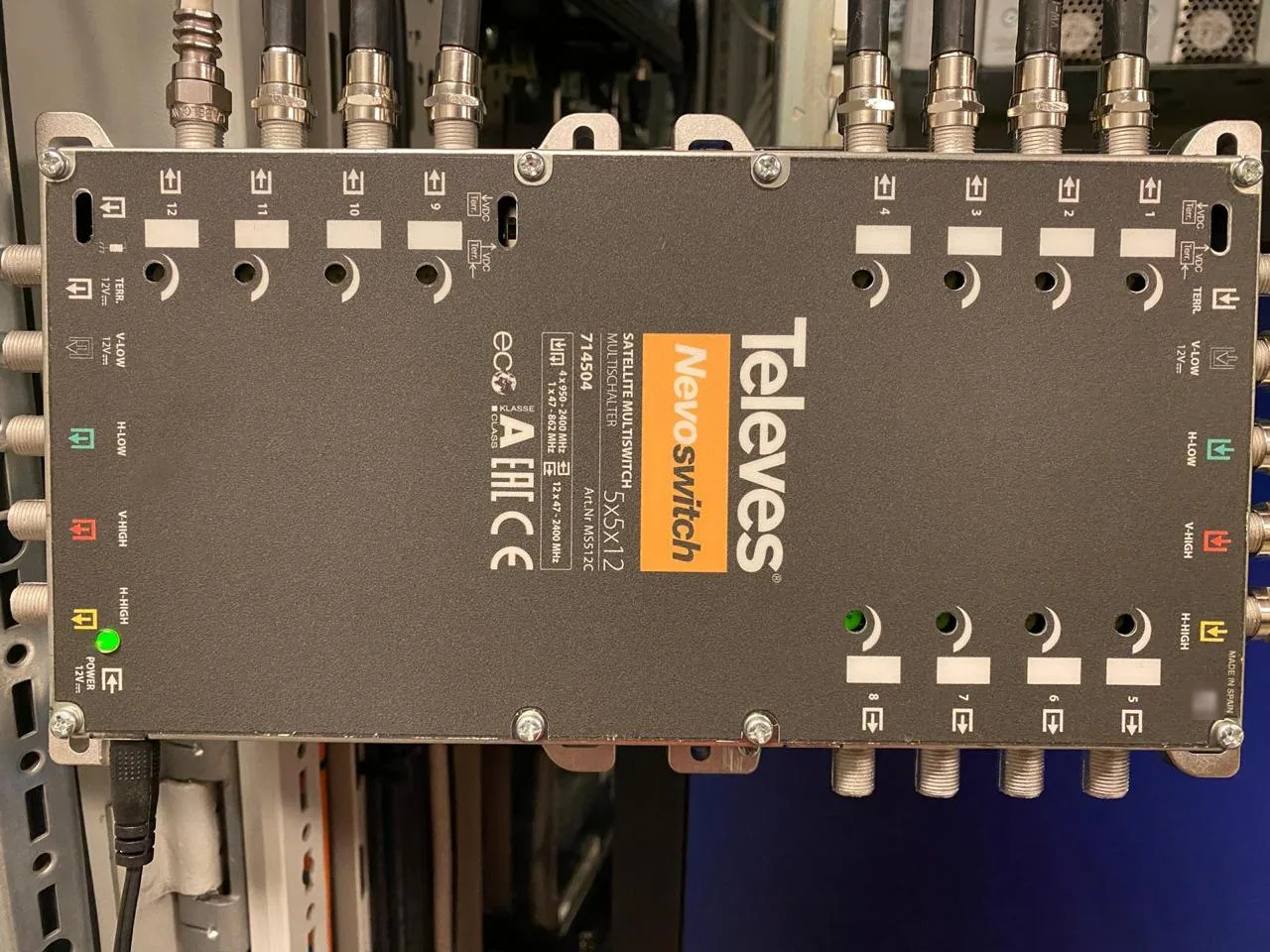
One TVRO antenna can supply television to many locations throughout the vessel. A quad LNB on the antenna delivers all four satellite bands (vertical and horizontal, low and high) to a satellite multiswitch, which then feeds the receivers in crew cabins, mess rooms, lounges, the bridge and passenger accommodation.
Because every outlet has access to all four bands, each viewer can select a different channel independently from the satellite being received. A terrestrial input can be combined on the same cable for local TV and FM radio in port.
The installation is designed around the number of televisions you need:
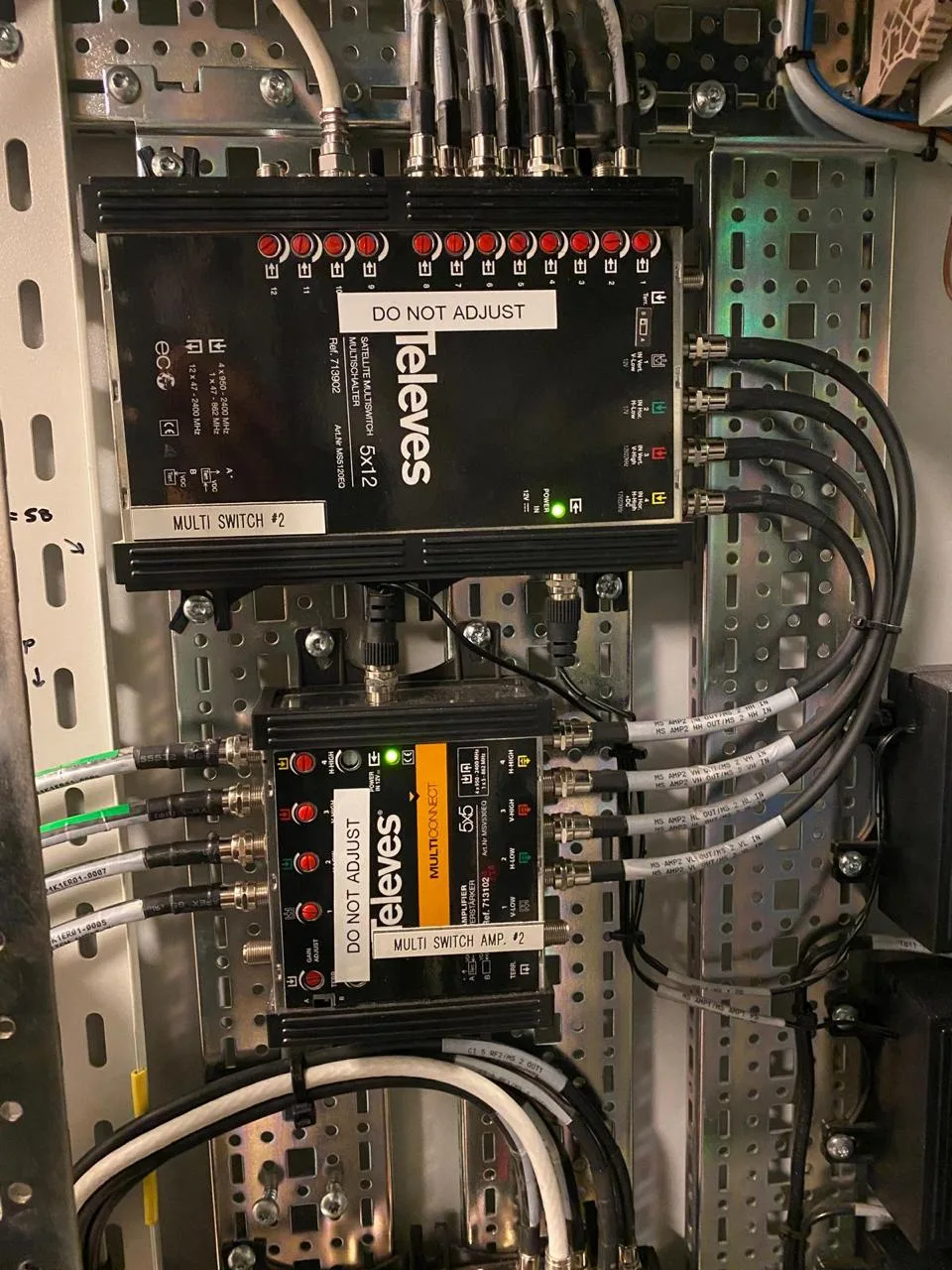
- Multiswitch size, for example 5x8, 5x12 or 5x16 outputs, cascaded for larger vessels
- Line amplifiers to compensate for long cable runs between decks
- Signal levels measured and adjusted at every outlet
- Clear labelling of every cable and port for easy future maintenance
TVRO + IPTV
Combine TVRO with onboard IPTV
Live TV
Television channels received through the TVRO antenna, streamed to every cabin and public area over the onboard network.
Video on demand
Locally stored films, series and documentaries that viewers can start whenever they want, without using internet data.
Training & safety channels
Onboard instruction videos, safety briefings, company news and crew training content on a dedicated channel.
Works offline
Live TV, VOD and training run without an external internet connection. Only online streaming and new downloads need internet.
Benefits
Why install TVRO on your vessel?
Support crew welfare
News, sports and familiar programmes in their own language during time off make long periods at sea more comfortable and help retain good crew.
Reduce internet data consumption
Broadcast TV uses no internet bundle, which matters most when many people would otherwise stream live TV separately.
Automatic satellite tracking
The antenna follows the selected satellite while the vessel moves, with no manual adjustment during normal operation.
Supply the whole vessel
One antenna feeds cabins, mess rooms, offices and lounges through a multiswitch or IPTV system.
Better passenger experience
Hotel-style television in cabins and lounges on ferries, cruise ships, yachts and floating accommodation.
Independent of internet
Satellite TV stays available when the internet connection is interrupted, as long as satellite reception is maintained.
System selection
Choosing the right marine TVRO system
The right TVRO antenna depends on more than the size of the vessel. Your sailing area, preferred channels, satellite coverage and antenna location all influence the choice between compact 45 to 60 cm antennas for coastal waters and larger 85 cm or 1 m systems for extended coverage. Satcenter works with leading manufacturers such as Intellian and KVH, and with Televes distribution equipment.
Before we recommend a system, we assess:
- Your operating area, trading routes and the satellites that cover them
- The television channels, languages and providers your crew and guests want
- The antenna size needed for reliable reception across that coverage
- Available mounting positions, mast space and potential blockage or radar interference
- The number of televisions and the condition of existing coaxial or network cabling
- Whether multiswitch distribution, IPTV or a combination best suits the vessel
This way the antenna and distribution system match how television will actually be used on board, without paying for capacity you do not need.
Installation & service
TVRO installation, maintenance and support by Satcenter
Satcenter supplies, installs and maintains marine satellite TV systems on commercial vessels, offshore units, ferries and yachts. Our own engineers attend ships in Rotterdam, Istanbul and ports across Europe, often at short notice during a port stay.
- TVRO antenna mounting, radome installation and commissioning
- Antenna control units, satellite libraries and receiver setup
- Coaxial cabling, multiswitches, amplifiers and outlet installation
- Integration with onboard IPTV and the vessel network
- Troubleshooting reception problems and upgrading older systems
After installation we stay available through 24/7 maritime support and planned maintenance visits. Tell us your vessel's sailing area, preferred channels and number of televisions, and we will advise on a suitable solution.
FAQ
Marine TVRO: frequently asked questions
Quick answers to the questions shipowners, superintendents and yacht captains ask us most about satellite TV at sea.
No. A TVRO antenna receives broadcast television directly from a TV satellite. Watching these channels does not use your Starlink, OneWeb, VSAT or 4G data allowance.
Yes. A marine TVRO antenna is stabilised and tracks the satellite automatically while the vessel turns, rolls and pitches, so TV keeps working at sea as long as you are inside the satellite's coverage area and the view to the satellite is clear.
It depends on where you sail and which satellites you want to receive. Compact antennas of around 45 to 60 cm suit coastal and regional use, while 85 cm to 1 m antennas hold the signal further from the beam centre and in heavier weather. We advise after reviewing your routes and preferred channels.
Yes. With a quad LNB and a correctly sized multiswitch, or with an IPTV system, each television or receiver can select its own channel from the satellite being received.
That depends on your sailing area, the satellite and the provider. Many channels are free-to-air; encrypted packages such as Sky, Canal+ or Digiturk need a compatible receiver and a valid subscription.
TVRO is the antenna system that receives TV from a satellite. IPTV is a way to distribute television over the ship's network. They work well together: TVRO provides the live channels and an IPTV headend streams them, plus video on demand and training content, to TVs throughout the vessel.
Very heavy rain can briefly weaken Ku-band TV signals, especially at the edge of a satellite footprint. A larger antenna gives more margin and reduces these short interruptions.
Yes. Our engineers troubleshoot reception and tracking faults, replace LNBs, control units and multiswitches, extend distribution to more cabins and integrate existing TVRO antennas with new IPTV systems.
Brands and broadcasters we work with






Vessel Tech
Related solutions
Get in touch
Plan satellite TV for your vessel
Share your sailing area, preferred channels and number of televisions. One of our engineers will get back to you within one business day with a suitable TVRO or IPTV proposal.
- Call us 24/7+31 85 560 71 20
- Emailinfo@satcenter.tv
-
Head OfficeKortebrantstraat 7A
3031 PM Rotterdam
The Netherlands -
Türkiye OfficeEsentepe, Yüzbaşı Kaya Aldoğan Sk. No:4
34394 Şişli / İstanbul
Türkiye