Skip to content

ECDIS · Navigation systems · Bridge integration

ECDIS Installation and Commissioning by experienced maritime engineers

Professional ECDIS installation, commissioning and troubleshooting for commercial vessels, offshore vessels and other maritime applications. Satcenter engineers attend vessels in the Netherlands, Belgium, Germany and other European ports.

Electronic chart navigation

What is ECDIS and why does correct installation matter?

ECDIS (Electronic Chart Display and Information System) is the type-approved navigation system that replaces paper charts on the bridge, displaying official electronic navigational charts (ENCs) together with live data from the ship's sensors.

Under SOLAS Chapter V, most commercial ships trading internationally are required to carry ECDIS, usually as a primary and a backup system. An ECDIS is only as reliable as its installation: the position, heading, speed and depth it shows all come from other bridge equipment, and every one of those connections has to be correct.

Satcenter supports shipowners, ship managers, technical managers, yards and maritime service companies with ECDIS projects from the first survey to the final functional test:

  • Physical installation of displays, processing units and keyboards
  • Connection to GNSS, gyro, speed log, echo sounder, AIS and radar
  • Software configuration, chart setup and display settings
  • Commissioning, functional testing and handover to the crew
  • Troubleshooting of existing ECDIS systems onboard
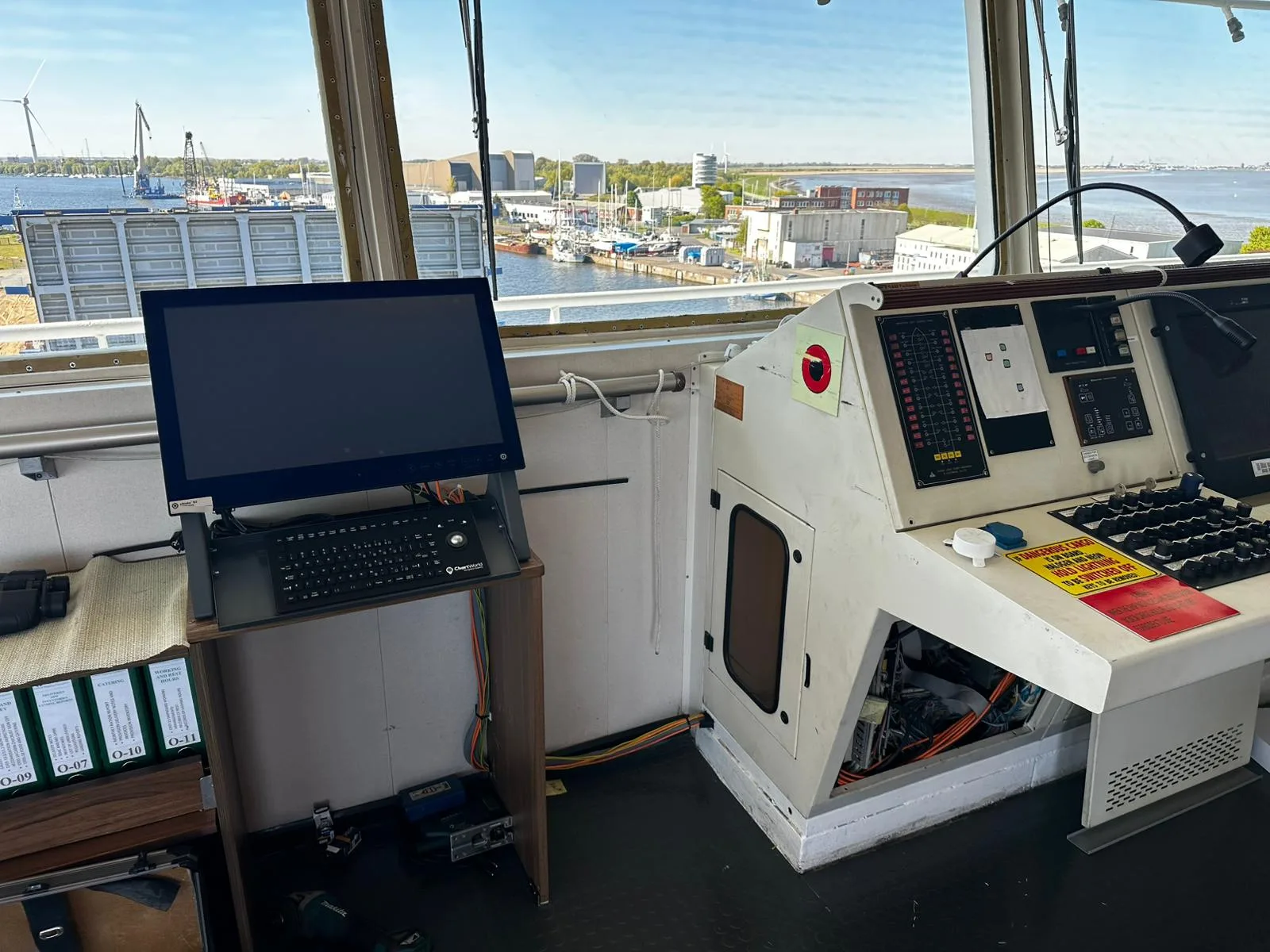
Newly installed ECDIS display with keyboard and trackball next to the bridge console of a cargo vessel

Installation

ECDIS installation services

A correct ECDIS installation is essential for reliable operation onboard. Our engineers carry out the physical installation and the technical setup of ECDIS equipment, for new installations, replacement projects and upgrades of existing ECDIS systems.

What an ECDIS installation includes

  • Mounting displays, workstations, processing units and keyboards in the bridge console or on pedestals
  • Power supply, UPS connection and earthing according to the manufacturer's requirements
  • Cabling and termination in the bridge console and interface cabinets
  • Connection of sensor inputs over NMEA 0183 serial lines and the bridge Ethernet network
  • Network connection between the primary and backup ECDIS
  • Checking the required communication with the existing ship systems

Cables are labelled and routed neatly so that the next engineer onboard can trace every connection. After installation the system is tested before commissioning starts.

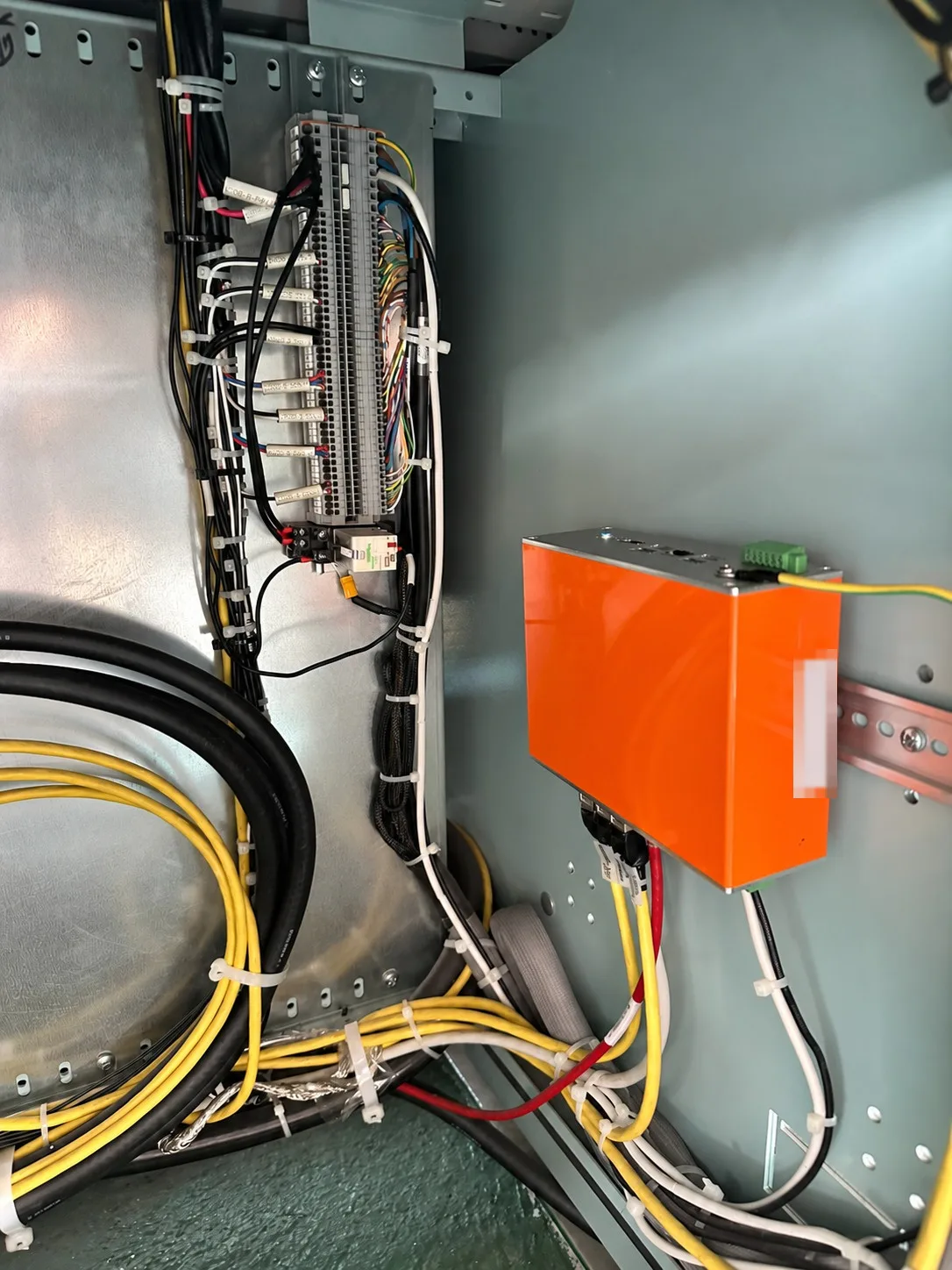
ECDIS interface cabinet with terminal blocks, labelled sensor cables and a marine network switch

Commissioning

ECDIS commissioning onboard

After installation an ECDIS system needs to be correctly configured and tested before it can be put into operation. Our engineers perform ECDIS commissioning onboard the vessel and verify that the system is working correctly.

Typical commissioning steps

  • System configuration: ship particulars, antenna and sensor offsets, safety contour and safety depth settings
  • Communication checks: every sensor input verified for correct data, update rate and alarm behaviour
  • Software settings: software version, chart permits and chart loading checked
  • Display configuration: day and night palettes, brilliance, layout and user profiles
  • Functional testing: route planning, route monitoring, alarms and the changeover to the backup ECDIS

Any problems discovered during commissioning are investigated directly onboard. At handover the crew receives a practical walkthrough of the installed system, and the owner receives the commissioning results for the vessel's records.

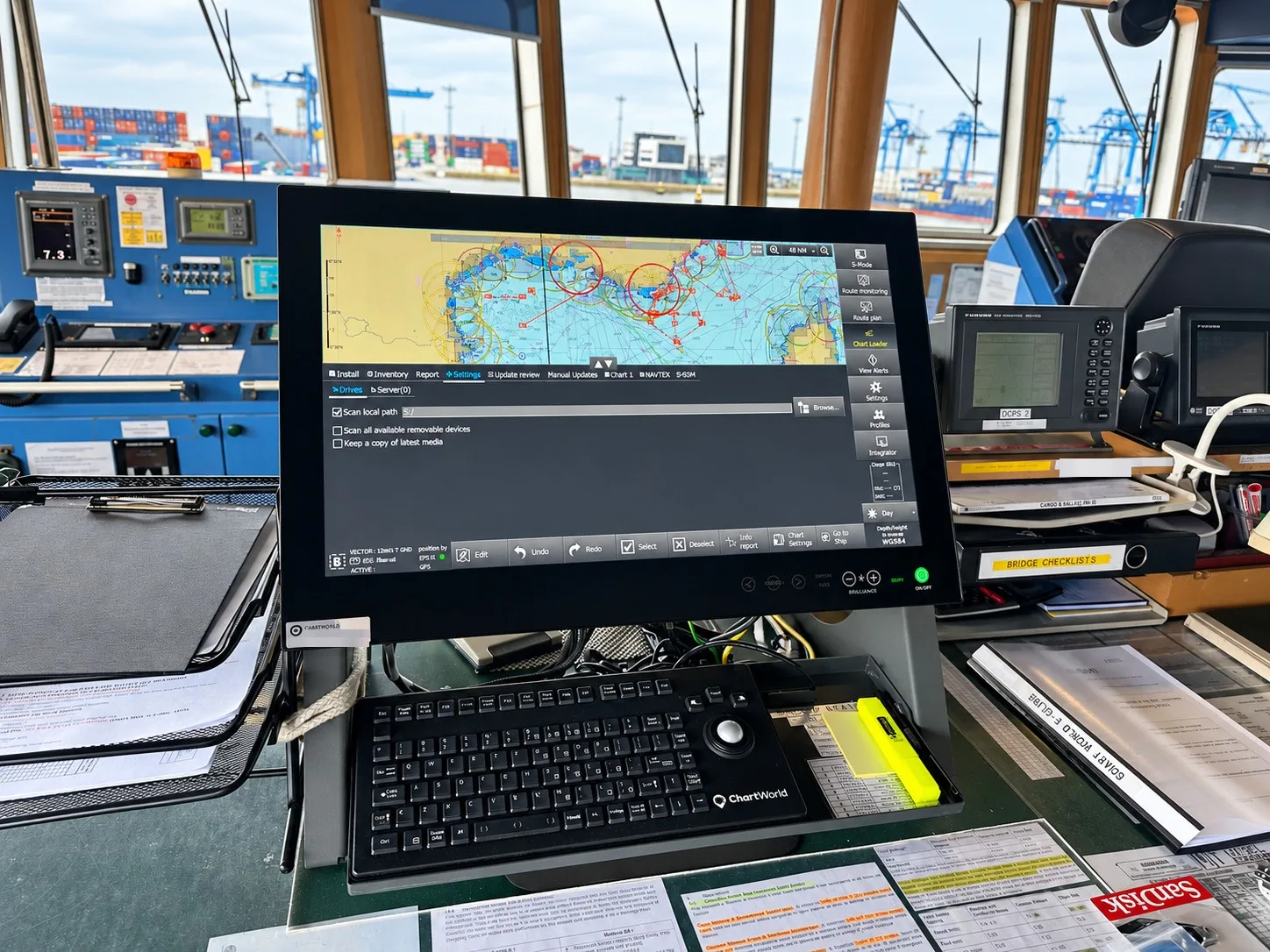
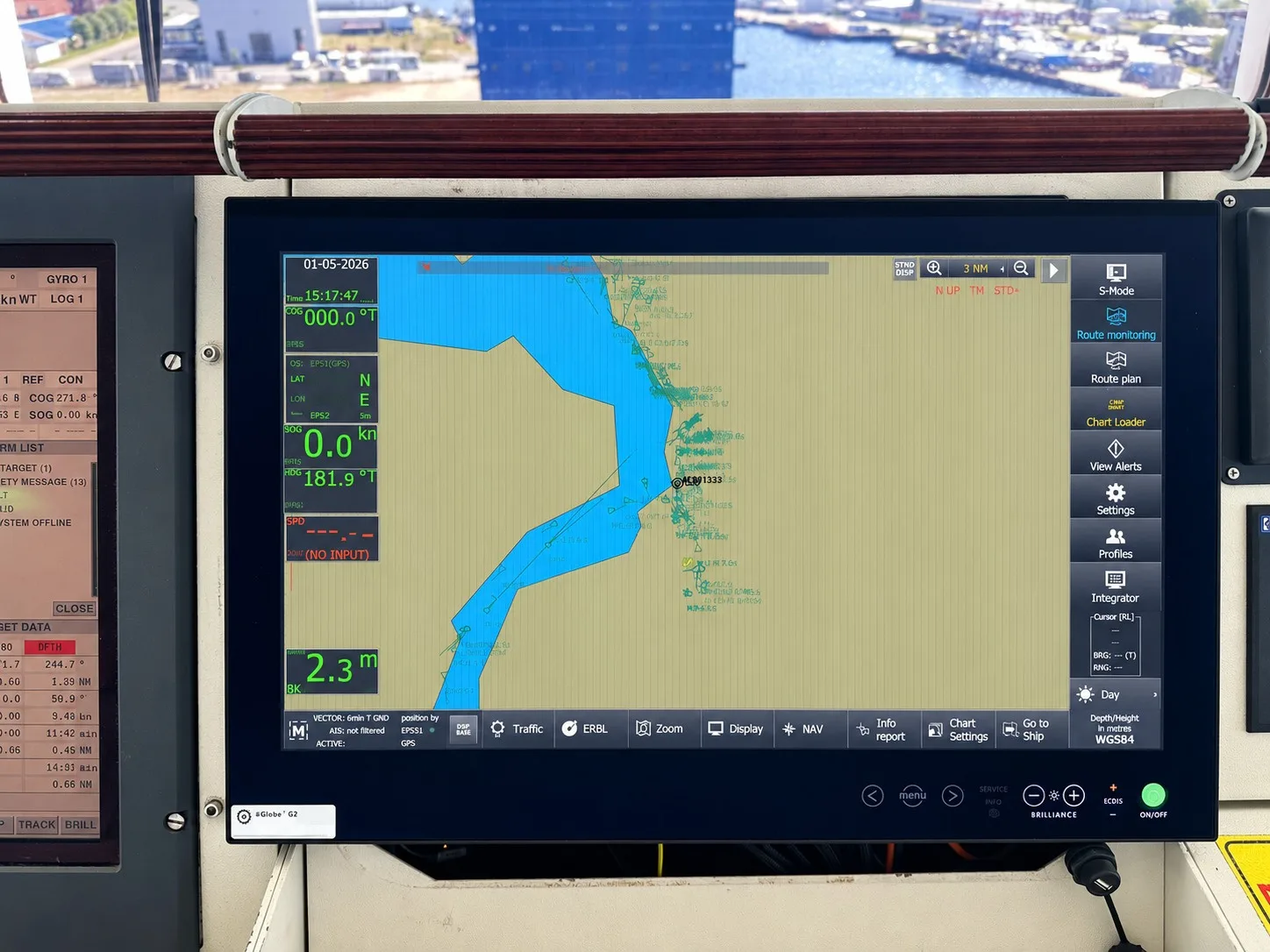
ECDIS chart display in route monitoring mode with heading, speed and depth data during commissioning

Troubleshooting

ECDIS troubleshooting and fault finding

ECDIS problems can cause serious operational issues onboard a vessel. A failed primary ECDIS leaves the bridge relying on the backup, and a fault in both can delay departure. Satcenter provides ECDIS troubleshooting for vessels experiencing system faults, communication problems, configuration errors or startup problems.

Our engineers attend the vessel to investigate the problem and determine the cause of the fault. Where possible the problem is diagnosed and resolved during the same service attendance.

Common ECDIS problems we solve

  • System startup failures: units that do not boot, freeze or restart unexpectedly
  • Display problems: black, flickering or incorrectly calibrated screens
  • Software errors: application faults after updates or corrupted configurations
  • Communication faults: lost connection between ECDIS units or to the bridge network
  • Missing data: no position, heading, speed, depth or AIS targets on the chart
  • Configuration problems: wrong offsets, sensor priorities or alarm settings
  • Hardware related issues: failed power supplies, keyboards, trackballs, cabling or interface modules

Many faults turn out to be in the connections to other equipment rather than in the ECDIS itself, so we check the full signal path from sensor to display.

Newbuild and retrofit

ECDIS installation for newbuild and retrofit projects

Satcenter supports both newbuild and retrofit ECDIS installation projects.

Newbuild projects

On newbuilds we work together with the yard and the electrical contractor, following the bridge drawings and the cable schedule, and commission the ECDIS together with the rest of the navigation equipment before delivery.

Retrofit projects

For retrofit projects our engineers remove or replace the existing equipment and install the new ECDIS system in the available bridge environment. Before installation the existing setup is checked to determine the required connections and installation requirements:

  • Available space in the console and mounting options for the new displays
  • Existing cabling and which cables can be reused
  • Sensor outputs, data formats and free interface ports
  • Power supply and UPS capacity

This preparation helps reduce unexpected problems during installation and commissioning and keeps the time the vessel spends without a working ECDIS as short as possible.

ECDIS workstation installed beside the original bridge console during a retrofit on a cargo vessel

Why Satcenter

Professional ECDIS engineers

Our maritime engineers have practical experience working onboard commercial vessels and understand the requirements of working in an operational bridge environment.

Onboard experience

Engineers who know bridge routines, permit-to-work systems and how to work around a vessel's port schedule.

Correct installation

Neat cabling, clear labelling and documented connections, so the system is reliable and easy to service later.

Clear communication

One contact for the project and clear reporting to the superintendent, the yard and the crew.

Efficient commissioning

Preparation before attendance, so commissioning fits within the port stay and the vessel can sail on time.

Port attendance

ECDIS service in European ports

Satcenter is based in the Netherlands and provides ECDIS installation, commissioning and troubleshooting in major European ports. Our engineers can work together with shipyards, vessel managers, manufacturers and other maritime service companies during ECDIS projects.

Engineer attendance can be arranged in

  • Netherlands: Rotterdam, Amsterdam and IJmuiden
  • Belgium: Antwerp, Ghent and Zeebrugge
  • Germany: Hamburg, Bremen and Bremerhaven

Attendance in other European ports can also be arranged depending on vessel location and project requirements. The same engineers also install and support GMDSS systems, Starlink and VSAT connectivity and onboard IT networks, so several jobs can be combined in one port call. For scheduled service visits see our commissioning and maintenance services.

FAQ

ECDIS installation: frequently asked questions

Answers to the questions shipowners, superintendents and yards ask us most about ECDIS projects.

Still have questions?

Our engineers are happy to help.

Contact an engineer

A replacement of an existing ECDIS with good preparation can often be completed within one or two days in port, including commissioning. A full retrofit with new cabling, or a dual ECDIS installation on a newbuild, takes longer. We confirm the planning after checking the existing setup.

At minimum the ECDIS receives position from the GNSS receiver, heading from the gyro compass and speed from the speed log. Most installations also connect the echo sounder, AIS and radar, and often the autopilot, wind sensor and BNWAS.

Commissioning covers system configuration, communication checks on every sensor input, software and chart settings, display configuration and functional testing of route planning, route monitoring, alarms and the backup ECDIS.

Yes. Our engineers investigate faults on existing ECDIS systems, including startup failures, display problems, software errors, communication faults and missing sensor data, and resolve them during the attendance where possible.

Often it can. Before installation we check the existing cables, connections and interfaces, and reuse what is in good condition. This shortens the installation and reduces cost.

We regularly attend vessels in Rotterdam, Amsterdam, IJmuiden, Antwerp, Ghent, Zeebrugge, Hamburg, Bremen and Bremerhaven. Other European ports can be arranged depending on vessel location and project requirements.

Get in touch

Request ECDIS installation or service

Send us the vessel type, the port and expected dates, the ECDIS model and a short description of the job or the fault. We will come back with a proposal for installation, commissioning or troubleshooting. You can also reach us at info@satcenter.tv or +31 (0)85 560 71 20.

  • Call us 24/7+31 85 560 71 20
  • Emailinfo@satcenter.tv
  • Head OfficeKortebrantstraat 7A
    3031 PM Rotterdam
    The Netherlands
  • Türkiye OfficeEsentepe, Yüzbaşı Kaya Aldoğan Sk. No:4
    34394 Şişli / İstanbul
    Türkiye

Send us a message

We usually reply within one business day.

Our Blog

View all