Skip to content

Marine CCTV · Explosion-proof cameras · Remote viewing

Maritime CCTV Surveillance for decks, engine rooms and hazardous areas

Marine-grade CCTV systems for cargo ships, tankers, LNG carriers, offshore units and yachts. Satcenter designs, installs and supports onboard camera systems that keep the bridge and the office ashore informed, at sea and in port.

Onboard video surveillance

What is a maritime CCTV system?

A maritime CCTV system is a network of marine-grade cameras, recorders and monitors that lets the crew watch critical areas of the vessel from the bridge, the engine control room or the office ashore.

Unlike a building system, onboard CCTV has to cope with salt spray, vibration, temperature swings, wet decks and, on tankers and gas carriers, explosive atmospheres. Cameras, housings, cable glands and junction boxes must be chosen and installed for those conditions.

A typical ship CCTV installation includes:

  • Fixed, dome and PTZ (pan-tilt-zoom) IP cameras for deck and interior areas
  • Explosion-proof cameras for hazardous zones
  • A network video recorder (NVR) with sufficient storage
  • PoE switches, junction boxes and marine cabling
  • Monitors on the bridge and in the engine control room
  • Optional secure remote viewing over the vessel's satellite link
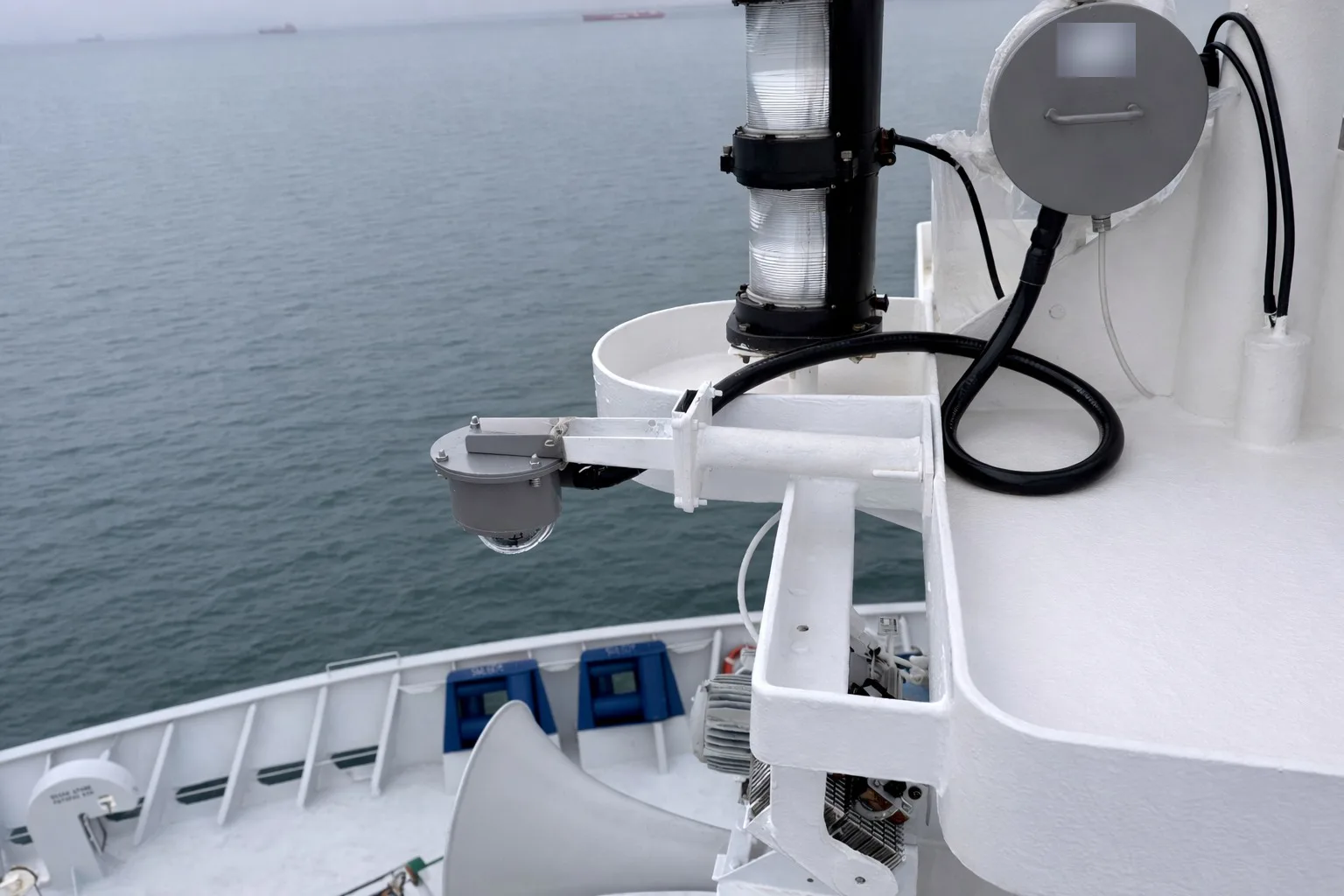
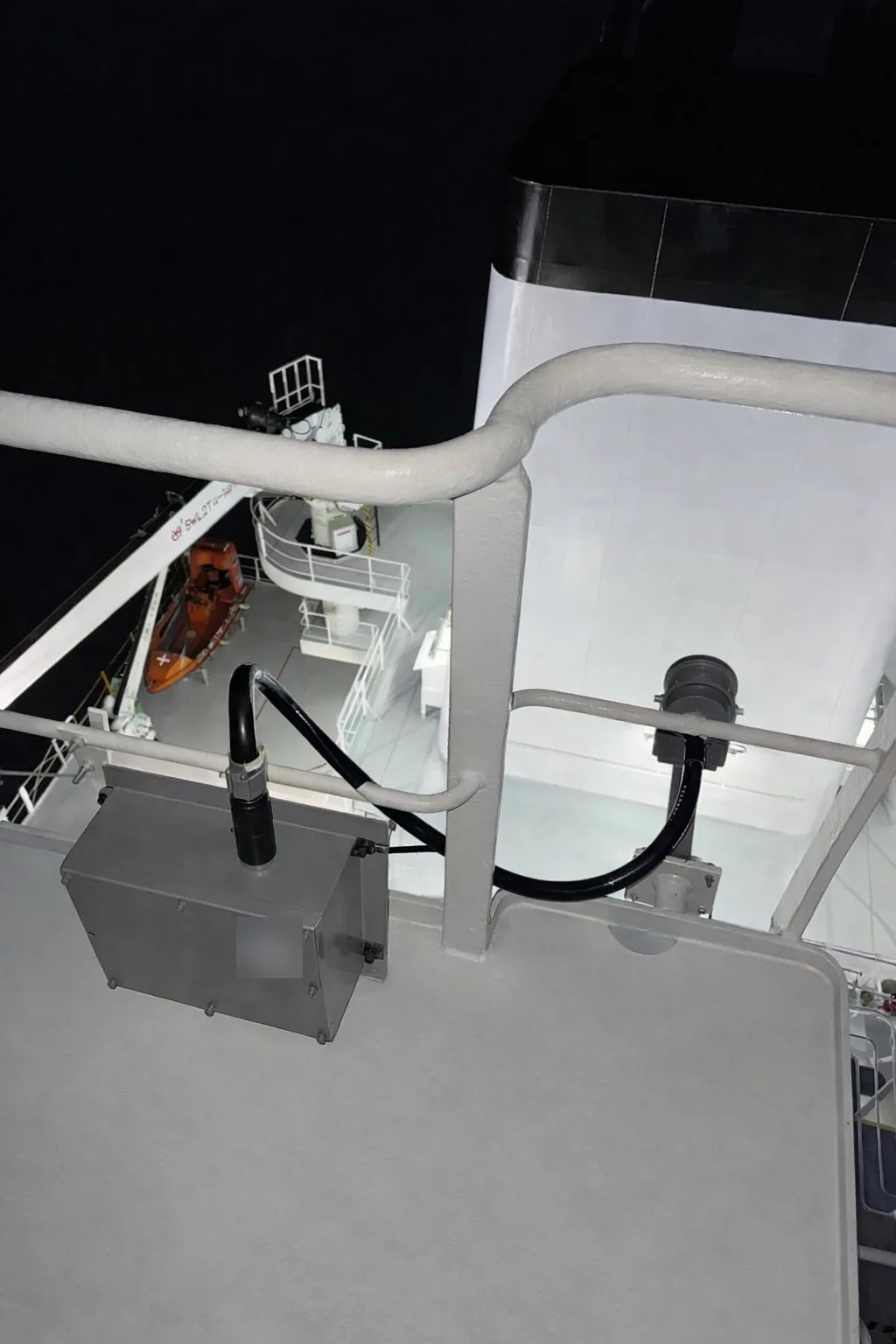
Marine CCTV camera on the funnel deck railing with a stainless steel junction box and armoured cable

Coverage onboard

Where ship CCTV cameras make the difference

We plan camera positions around how the vessel actually operates, so the watchkeeper sees what matters without walking the deck.

Deck, mooring and gangway

Forecastle, mooring stations, accommodation ladder and gangway watch during berthing, cargo work and port stays.

Engine room and machinery spaces

Main engine, generators, purifiers and steering gear, visible from the engine control room and the bridge, including during unmanned periods.

Cargo and hazardous areas

Cargo manifolds, pump rooms and cargo deck areas on tankers and gas carriers, covered with certified explosion-proof cameras.

Holds, cranes and lashing

Cargo holds, crane operations and container lashing areas, so the bridge can follow loading and discharging in real time.

Security and access control

Accommodation entrances, stairways and restricted areas in support of the ship security plan and ISPS Code procedures.

Passenger and yacht areas

Public spaces on passenger vessels and discreet exterior coverage on superyachts, at anchor and alongside.

ATEX and IECEx certified

Explosion-proof CCTV cameras for hazardous marine environments

On oil and chemical tankers, LNG and LPG carriers, FPSOs and offshore units, cameras in hazardous areas must not become a source of ignition. Satcenter supplies and installs explosion-proof CCTV cameras certified to ATEX and IECEx for use in Zone 1 and Zone 2 gas areas.

  • Flameproof housings in stainless steel or marine-grade aluminium, with suitable gas group and temperature class ratings
  • Fixed and PTZ versions, including models with built-in IR illumination for night and low-light areas
  • Certified cable glands and junction boxes so the protection concept is kept from camera to cable entry
  • IP66, IP67 and IP68 ingress protection against sea spray, washdown and heavy weather

We check the vessel's hazardous area classification, select equipment that matches the zone, and document the installation for class and terminal inspections. The same rugged cameras also suit engine rooms, where heat, oil mist and vibration quickly wear out standard equipment.

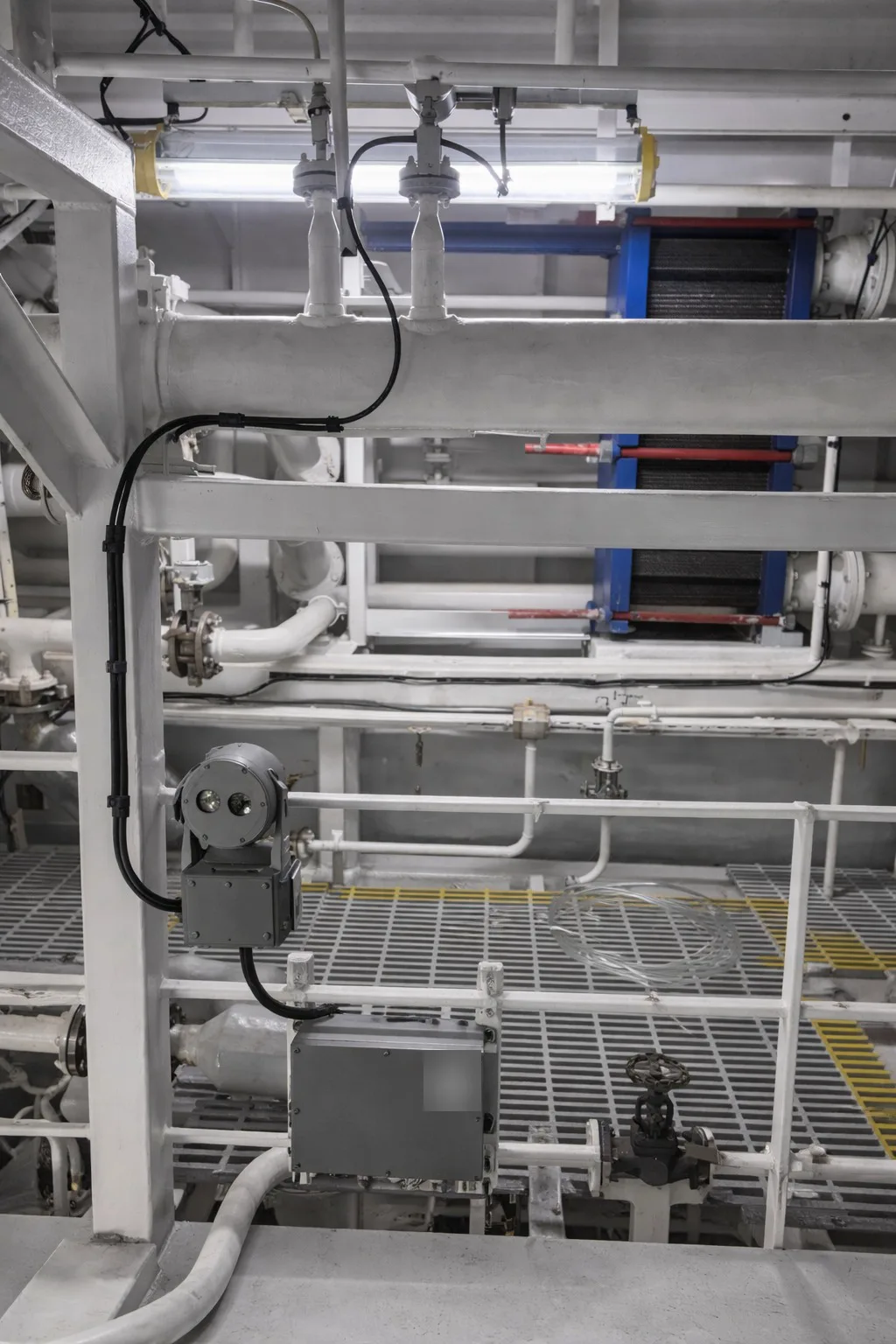
Explosion-proof PTZ CCTV camera with junction box installed on a steel frame in a ship engine room

Built for the sea

Marine CCTV camera types and features

Waterproof marine cameras

Exterior cameras with IP66/IP67 housings, corrosion-resistant finishes and sun shields, built to deliver a clear image through salt spray, rain and direct sunlight, 24 hours a day.

Dome and bullet cameras

Compact fixed cameras for corridors, stairways, stores and machinery spaces. Vandal-resistant domes suit accommodation areas and passenger spaces.

PTZ cameras

Pan-tilt-zoom cameras give one operator control over a large area such as the cargo deck, the mooring stations or the main engine flat, with preset positions for routine checks.

Night vision and thermal imaging

Infrared cameras keep the deck visible at night. Thermal cameras detect people and heat sources in complete darkness and support anti-piracy watchkeeping and early detection of overheating equipment.

Smart video analytics

Motion detection, line crossing and intrusion alerts notify the watch when someone enters a restricted area, so the crew does not need to watch every screen continuously.

AI video analytics

Why AI will become increasingly important for maritime CCTV

As the number of cameras on vessels increases, continuously monitoring every video stream becomes increasingly difficult. Even an experienced operator cannot watch dozens of camera feeds simultaneously throughout an entire watch.

AI changes this principle. Instead of asking the operator to continuously search the camera images for an incident, the system analyses the images and directs attention towards situations that may require action.

AI-based CCTV for HSE and operational safety

  • PPE detection supports safety procedures by flagging missing helmets, vests or other protective equipment.
  • Fall detection provides an additional warning in remote working areas.
  • Restricted area detection helps identify unsafe access to hazardous or controlled zones.
  • Person and vehicle classification reduces unnecessary alarms caused by waves, birds or moving shadows.
  • Intelligent video search significantly reduces the time required to investigate an incident.

From recording devices to intelligent sensors

In the future, we expect CCTV to become increasingly integrated with access control, vessel networks and other onboard monitoring systems. Cameras will no longer function only as recording devices. They will increasingly operate as intelligent sensors that provide real-time information about what is happening around the vessel.

Plan your CCTV upgrade with AI in mind

For shipowners planning a CCTV upgrade today, it is important to consider future AI capabilities even when these functions are not required immediately. Selecting suitable cameras, recording platforms and network infrastructure now makes it considerably easier to introduce advanced analytics later.

Recording and remote access

Onboard recording and remote viewing over satellite

All cameras record to a marine network video recorder (NVR) on board, with storage sized for the number of cameras, the resolution and the retention period your company requires. H.265 compression keeps file sizes small without losing detail, and recordings stay available on board even when the vessel has no internet connection.

With an onboard connection such as Starlink, OneWeb, VSAT or 4G/5G in coastal waters, superintendents and the fleet operations team can view live images and play back recordings from the office ashore.

Bandwidth-aware remote viewing

  • Lower-resolution sub-streams for live viewing over satellite
  • On-demand playback of selected clips instead of continuous upload
  • Snapshot and alarm notifications for the office and the master
  • Traffic rules so CCTV never takes capacity from operational applications

Secure by design

Cameras and recorders are placed on a separate network segment (VLAN), behind the vessel's firewall, with encrypted remote access and individual user accounts. No camera is exposed directly to the internet. Read more on our maritime cybersecurity and maritime IT services pages.

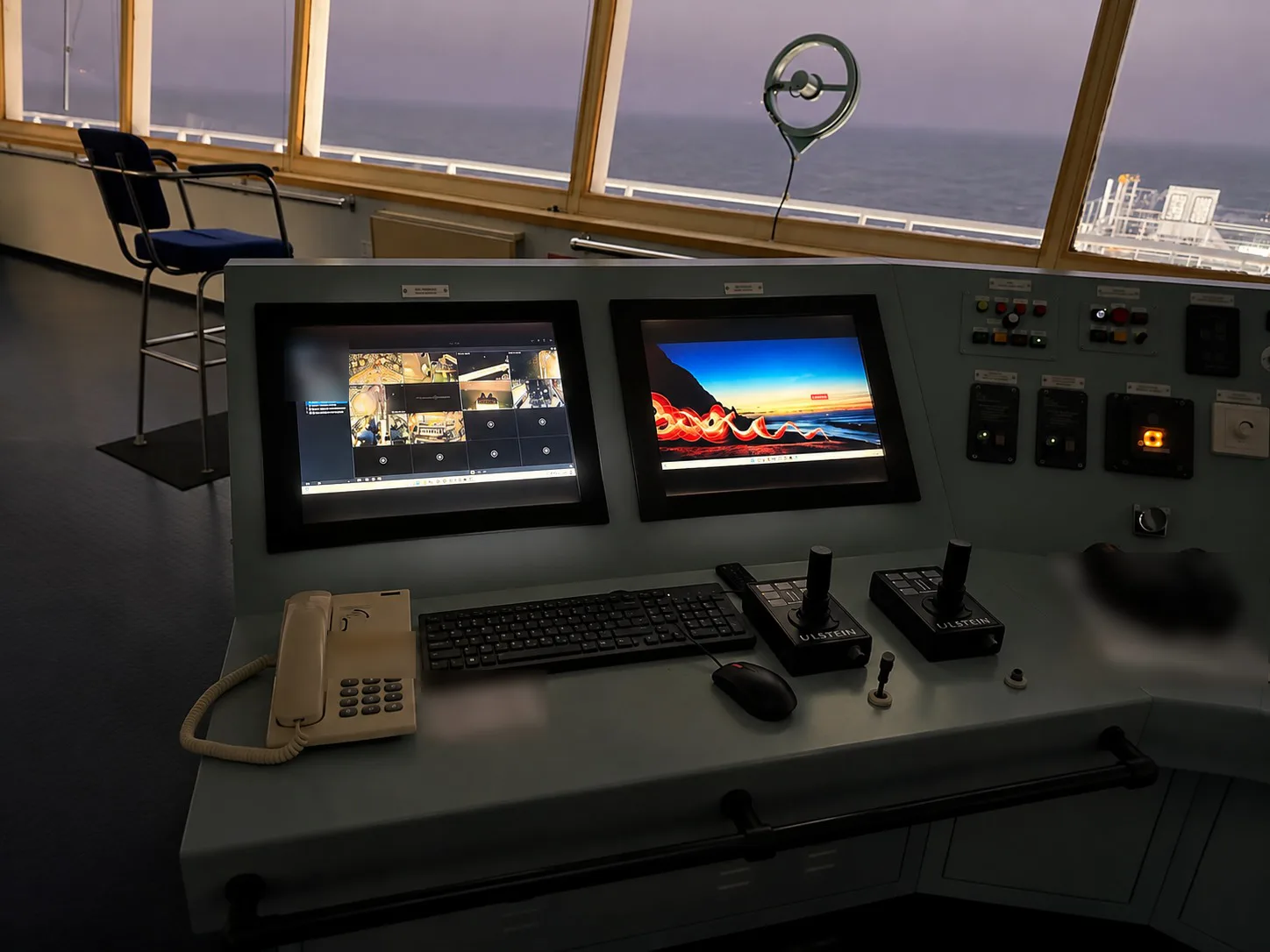
CCTV monitoring screen with live camera views on the bridge console of a gas carrier

Survey, installation, commissioning

Ship CCTV installation by Satcenter engineers

A camera is only as reliable as its mounting, cabling and cable entries. Our engineers handle the complete installation, from the first survey to handover to the crew:

  • Onboard survey and camera position plan
  • Selection of cameras, housings and hazardous-area equipment
  • Brackets and mounts on masts, railings, deckheads and engine room frames
  • Marine cabling, cable glands, junction boxes and penetrations
  • NVR, PoE switch and monitor installation on the bridge and in the ECR
  • Network integration, remote access and user configuration
  • Image adjustment, recording tests and crew familiarisation
  • As-built documentation for class and owner records

We plan the work around the vessel's schedule, in port, at anchor or during a voyage, with engineers based in Rotterdam and Istanbul and worldwide attendance by arrangement. Existing analogue systems can be upgraded to IP step by step, reusing cabling where possible.

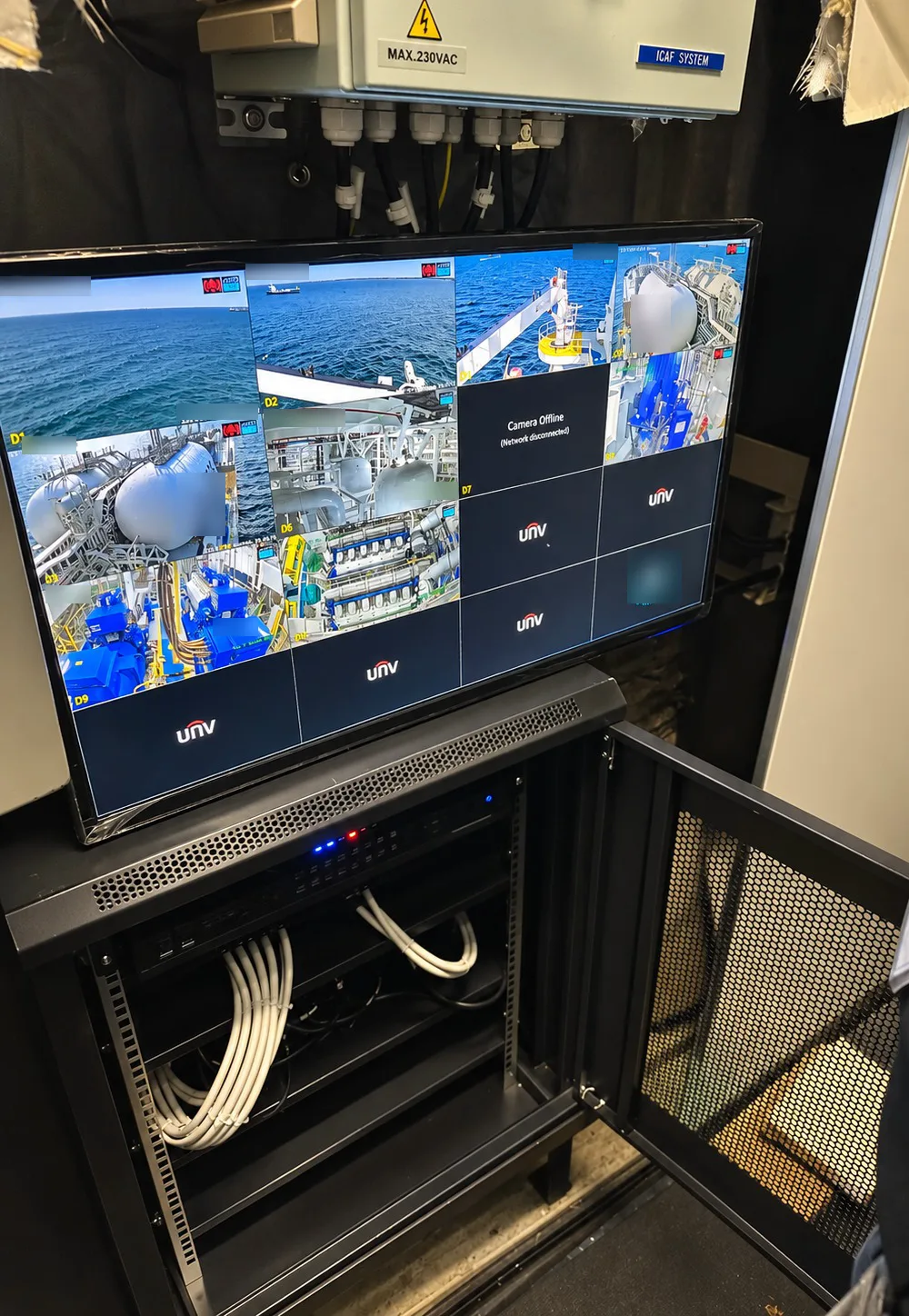
Ship CCTV monitor showing deck, cargo tank and engine room cameras above the NVR and network rack

After commissioning

CCTV maintenance and technical support

Our service continues after the system is handed over, so cameras keep recording when they are needed most.

Remote diagnostics

Camera, recorder and network faults investigated remotely over the satellite link, without waiting for the next port call.

Recorder and storage health

Checks on hard disk status, recording schedules and retention, so footage is available after an incident.

Firmware and configuration

Firmware updates and configuration backups for cameras and NVRs to keep the system secure and stable.

Learn more

24/7 technical support

Round-the-clock support from our engineers, plus onboard attendance for repairs, extensions and replacements.

Learn more

FAQ

Maritime CCTV: frequently asked questions

Answers to the questions shipowners, superintendents and yacht managers ask us most about onboard camera systems.

Still have questions?

Our engineers are happy to help.

Contact an engineer

Most vessels cover the engine room and machinery spaces, steering gear, mooring stations, gangway, accommodation entrances and the cargo deck. Tankers and gas carriers add the manifold and pump room areas with explosion-proof cameras. We prepare a position plan during the survey.

Cameras installed in a classified hazardous area, such as the cargo deck of a tanker or LNG carrier or a pump room, must be certified for that zone, for example to ATEX or IECEx Zone 1 or Zone 2. Outside hazardous areas, marine-grade IP66/IP67 cameras are sufficient.

Yes. Over Starlink, OneWeb, VSAT or 4G/5G, authorised users can view live images and recordings through encrypted remote access. We configure bandwidth-saving streams so CCTV does not disturb other onboard traffic.

That depends on the number of cameras, resolution, frame rate and recorder storage. Most systems are sized for 30 days or more of continuous recording; we size the NVR to your company policy.

AI analytics watch the camera images for the crew and raise an alert when attention is needed: missing PPE, a person falling or entering a restricted area, and intrusion around the vessel. Person and vehicle classification reduces false alarms, and intelligent video search makes incident investigation much faster.

Yes. We can replace cameras and recorders step by step, use encoders to keep working analogue cameras in service, and reuse existing cabling where its condition allows.

Not when it is installed correctly. We put cameras on a separate VLAN behind the firewall, change default passwords, keep firmware up to date and allow remote access only through encrypted connections.

Yes. Our engineers can work in port, at anchor or sail with the vessel between ports, and we plan cabling and hot work around the ship's schedule and permit-to-work system.

Get in touch

Plan your maritime CCTV system with Satcenter

Send us the vessel type, the areas you want to cover, any hazardous zones and your remote viewing needs. We will prepare a proposal covering cameras, installation and support. You can also reach us at info@satcenter.tv or +31 (0)85 560 71 20.

  • Call us 24/7+31 85 560 71 20
  • Emailinfo@satcenter.tv
  • Head OfficeKortebrantstraat 7A
    3031 PM Rotterdam
    The Netherlands
  • Türkiye OfficeEsentepe, Yüzbaşı Kaya Aldoğan Sk. No:4
    34394 Şişli / İstanbul
    Türkiye

Send us a message

We usually reply within one business day.

Our Blog

View all